Living in a cramped apartment or dealing with tiny rooms doesn’t mean you’re stuck feeling boxed in. Small space decorating can transform even the most compact areas into airy, open environments that feel surprisingly spacious.
This guide is perfect for apartment dwellers, homeowners with cozy rooms, and anyone who wants to maximize small spaces without breaking the bank or knocking down walls. You’ll discover how strategic lighting can instantly open up dark corners, learn which colors create visual expansion, and find out why multifunctional furniture is your secret weapon for cramped quarters.
We’ll also cover smart storage solutions that keep clutter hidden while maintaining style, plus reveal the visual tricks designers use to fool the eye into seeing more space than actually exists. These simple changes can make your small rooms look bigger and feel twice as comfortable.
Natural light acts like magic for small spaces, instantly making them feel more open and airy. Heavy curtains or dark blinds can make even the most charming room feel cramped and cave-like. Swap them out for sheer window treatments that let sunlight pour in while maintaining your privacy.
Sheer fabrics create a soft, diffused glow that extends throughout the room, eliminating harsh shadows that can make walls feel closer together. White or cream-colored sheers work best for lighting for small spaces because they reflect rather than absorb light. If you need more privacy during certain times of day, consider layering sheers with light-filtering cellular shades that you can adjust as needed.
Floor-to-ceiling sheer panels create vertical lines that draw the eye upward, making ceilings appear taller. Mount your curtain rods as close to the ceiling as possible and let the fabric just graze the floor. This simple small space decorating trick can add several inches of perceived height to any room.
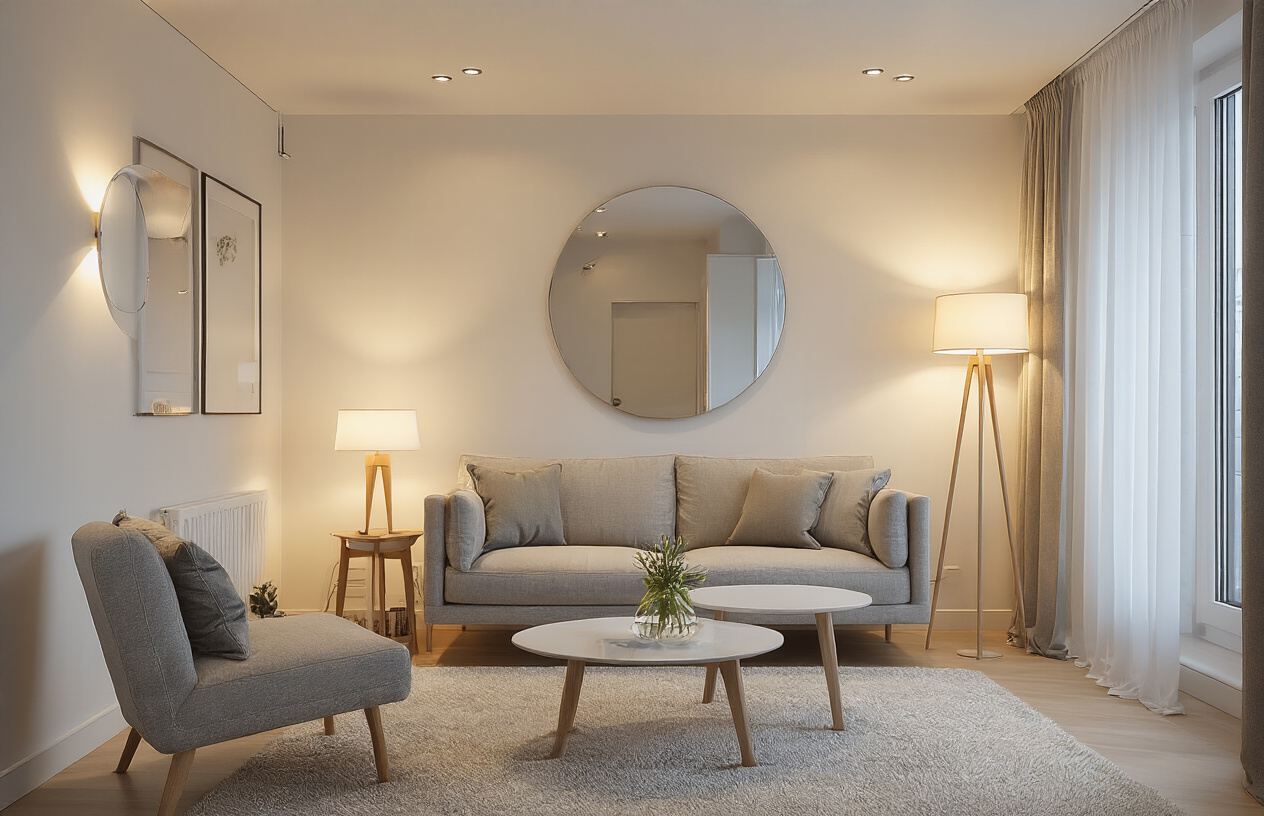
Single overhead fixtures cast unflattering shadows and create harsh contrast between bright and dark areas. Professional designers know that layering light at various heights creates depth and dimension that makes small rooms look bigger.
Start with ambient lighting from ceiling fixtures or pendant lights, then add task lighting through table lamps and floor lamps. Finish with accent lighting using wall sconces or picture lights. This three-layer approach eliminates dark corners where your eye naturally stops, creating the illusion of continuous space.
Place light sources at different heights throughout the room:
This small space design tip creates visual interest while ensuring every corner receives adequate illumination. The key is avoiding a single bright spot surrounded by darkness, which makes spaces feel fragmented and smaller.
Mirrors double your lighting investment by reflecting both natural and artificial light throughout the space. Position mirrors opposite or adjacent to windows to capture and redistribute daylight deep into the room. This classic visual trick for small rooms can transform a dim space into a bright, welcoming area.
Large mirrors create the most dramatic impact, but even smaller decorative mirrors help bounce light around dark corners. Group multiple mirrors of different sizes on one wall to create a gallery effect that multiplies light while adding visual interest.
Mirrored furniture pieces like coffee tables, side tables, or wardrobes serve double duty by providing storage while reflecting light. These pieces practically disappear in the space, making rooms feel less cluttered and more spacious.
Hidden lighting creates ambient glow without taking up valuable floor or surface space. Under-cabinet LED strips in kitchens eliminate shadows on countertops while making the room feel larger and more functional. The continuous line of light draws the eye along the counter, creating horizontal flow.
Install LED strips behind floating shelves, under bed frames, or along baseboards to create subtle accent lighting that makes walls appear to recede. This indirect lighting technique adds warmth without overwhelming small spaces with bright fixtures.
Battery-operated LED strips offer flexibility for renters or those avoiding electrical work. Stick them inside closets, pantries, or under stairs to illuminate previously dark storage areas, making your entire home feel more spacious and organized.
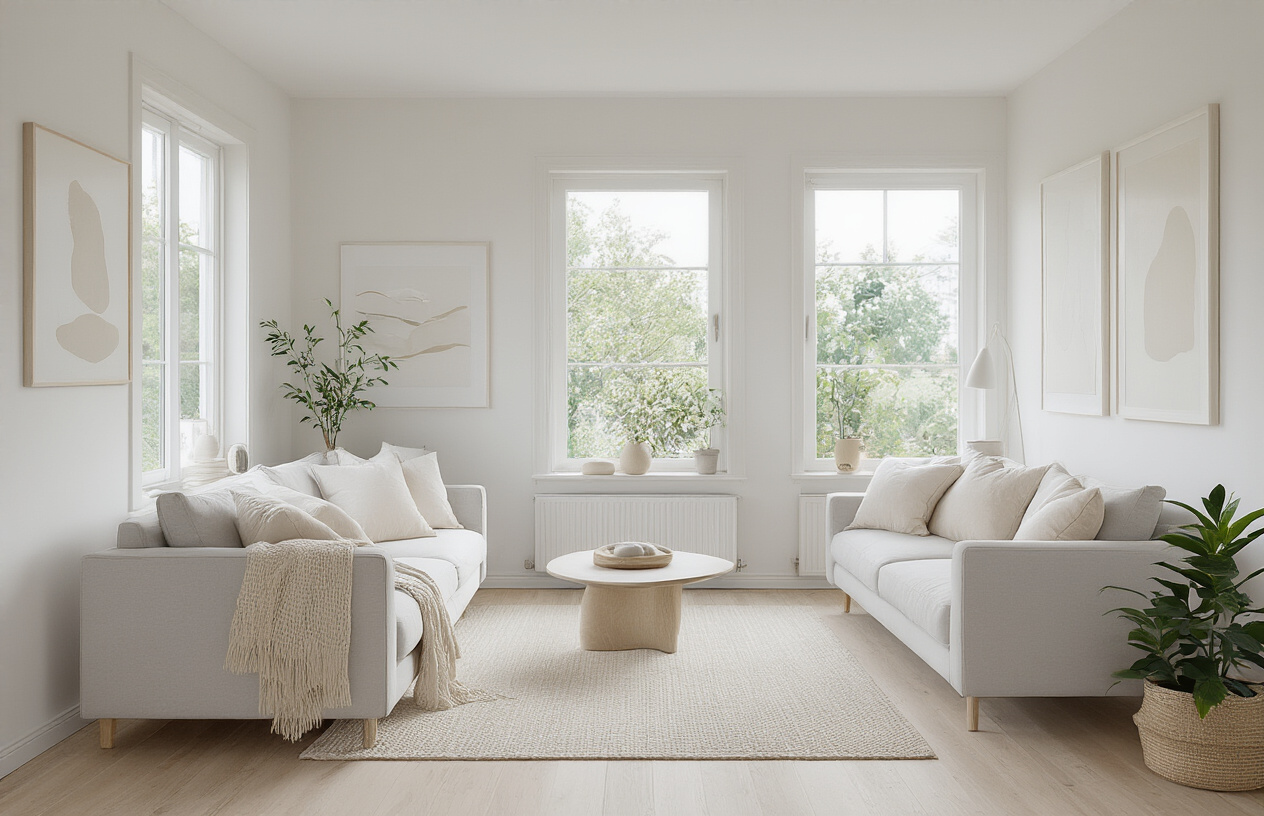
Color is your secret weapon when it comes to making small rooms look bigger, and light, neutral wall colors are the foundation of this strategy. Think whites, creams, soft grays, and pale beiges – these colors reflect natural light instead of absorbing it, which instantly makes your space feel more open and airy.
White walls remain the gold standard for small space decorating because they create a clean backdrop that visually pushes boundaries outward. Pure white might feel too stark for some, so consider warm whites like ivory or off-white that add subtle warmth while maintaining that expansive feeling. Cool grays work beautifully too, especially lighter shades like dove gray or silver, which can make walls seem to recede.
The science behind this approach is simple: light colors bounce photons around the room, creating the illusion of more square footage than you actually have. Dark colors do the opposite – they absorb light and make walls feel like they’re closing in on you.
When selecting your neutral base, consider the natural light your space receives. North-facing rooms benefit from warmer neutrals like cream or warm gray to counteract cooler natural light. South-facing rooms can handle cooler neutrals since they already get plenty of warm sunlight throughout the day.
A monochromatic approach means sticking to variations of the same color family throughout your small space. This creates visual flow that tricks the eye into seeing one continuous area rather than chopped-up sections.
Here’s how to nail the monochromatic look: choose your base neutral for the walls, then layer in slightly darker and lighter versions of that same color through furniture, textiles, and accessories. If you’ve painted your walls in a soft gray, incorporate charcoal gray furniture, light gray throw pillows, and silver accents.
This technique eliminates visual breaks that naturally occur when contrasting colors meet. Your eye moves smoothly around the room without getting stuck on jarring color transitions, which makes the space feel more cohesive and larger overall.
Monochromatic doesn’t mean boring – you can create plenty of interest through texture, pattern, and varying shades within your chosen color family. Mix smooth and rough textures, combine different patterns in the same color, and play with matte versus glossy finishes to add depth without breaking your color harmony.
Some winning monochromatic combinations for small spaces include various shades of:
While neutral bases and monochromatic schemes expand your space visually, strategic color accents prevent it from feeling bland or sterile. The key word here is strategic – you want to add color in ways that enhance the spacious feeling rather than breaking it up.
The 60-30-10 rule works perfectly for small room color schemes: 60% neutral base color (your walls), 30% secondary neutral (larger furniture pieces), and 10% accent color (accessories, artwork, throw pillows). This ratio maintains the airy feeling while adding personality.
Choose accent colors that complement rather than compete with your neutral base. If you’ve gone with cool grays, consider soft blues or lavender as accents. For warm neutrals, try sage green or muted coral. The goal is to enhance your existing palette, not fight against it.
Place your color accents thoughtfully to draw the eye around the room and create visual interest at different heights. A piece of colorful artwork on the wall, a bright throw pillow on the sofa, and a small colorful vase on a shelf create a triangle of color that keeps the eye moving – and a moving eye perceives more space.
Avoid placing all your color in one corner, which creates a visual weight that can make that area feel cramped. Instead, distribute small doses of color throughout the space. Fresh flowers, colorful books, or a single statement piece of furniture in your accent color work beautifully without overwhelming the space.
Remember that you can always change your accent colors seasonally to keep your small space feeling fresh while maintaining the spacious neutral foundation that makes it feel twice as big.
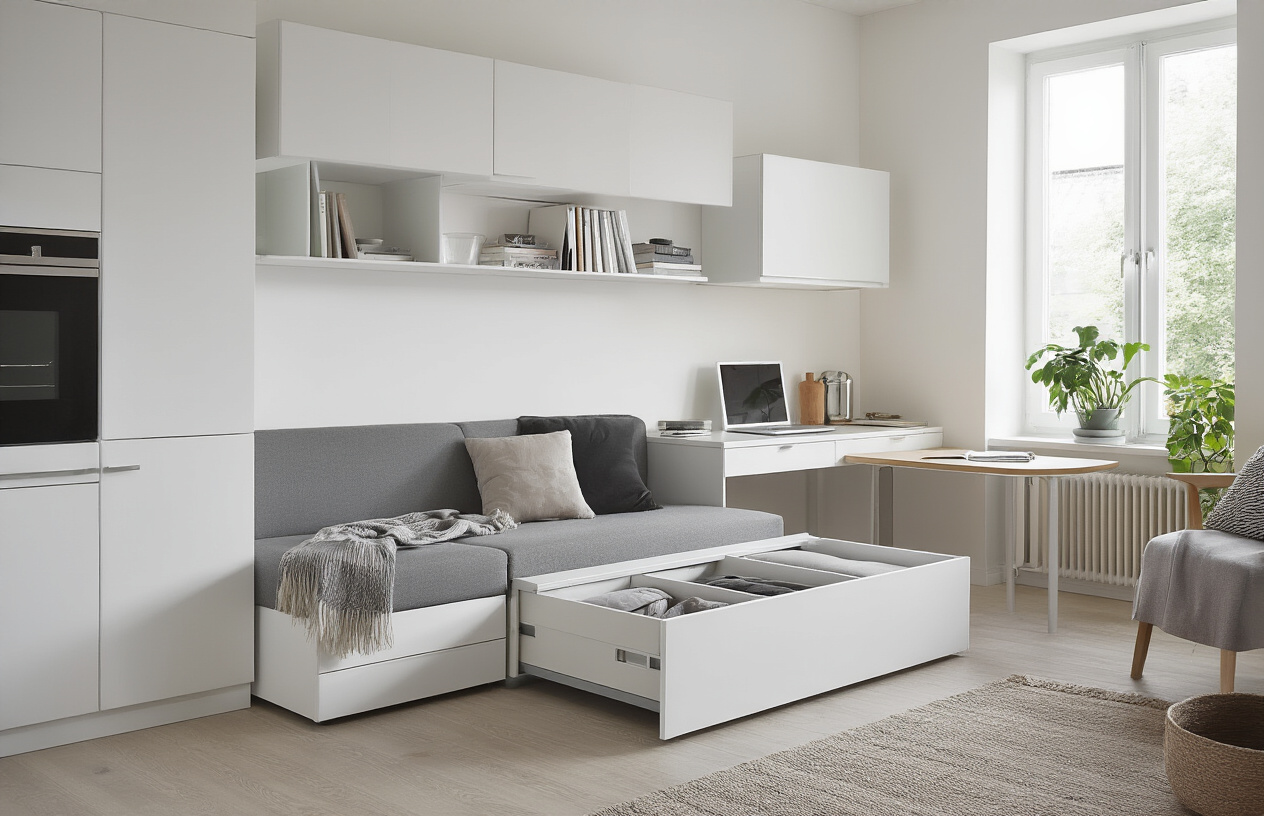
Storage ottomans are game-changers for small space decorating, offering both seating and hidden storage in one sleek package. These versatile pieces can hold everything from throw blankets to seasonal clothing while providing extra seating when guests arrive. Look for ottomans with removable tops that reveal spacious compartments underneath. Round ottomans work particularly well in tight corners, while rectangular ones can double as coffee tables with the addition of a decorative tray on top. The beauty of multifunctional furniture like this lies in how it eliminates the need for separate storage units, freeing up valuable floor space that makes rooms feel more open and breathable.
Nesting tables are perfect space saving furniture ideas that provide surface space when needed but tuck away neatly when not in use. A set of three nesting tables can serve as side tables, laptop desks, or display surfaces for plants and decor. When company comes over, simply pull out the smaller tables to create multiple surface areas throughout the room. Stackable seating follows the same principle – dining chairs that stack allow you to store extras in a closet and bring them out for entertaining. Folding chairs with sleek designs can hang on wall hooks, keeping them accessible but out of the way. This approach to small apartment design tips means you’re never stuck with furniture taking up space unnecessarily.
Wall-mounted furniture creates the illusion of more floor space by literally lifting pieces off the ground. Floating nightstands, desks, and even entertainment centers keep sight lines clear while providing all the functionality you need. This technique is one of the most effective ways to maximize small spaces because it maintains the visual flow of your flooring, making rooms appear larger than they actually are. Consider floating shelves instead of bookcases, wall-mounted fold-down desks that disappear when not needed, and suspended bedside tables that leave floor space completely open underneath. The key is choosing pieces that feel substantial enough to be functional while maintaining that airy, floating appearance.
Glass and acrylic furniture pieces are invisible space-makers that provide function without visual weight. A glass coffee table maintains sight lines across the room, while acrylic chairs seem to disappear, creating the impression that you have more space than you actually do. These materials reflect light beautifully, adding to the bright, open feeling that helps small rooms look bigger. Bar stools with clear backs, glass-top dining tables, and lucite side tables all contribute to this effect. The transparency doesn’t compete with other design elements, allowing your color schemes and decorative pieces to take center stage while the furniture quietly does its job.
Low-profile furniture keeps visual weight close to the floor, creating the impression of higher ceilings and more open space above. Choose sofas, beds, and storage pieces that sit closer to the ground rather than tall, imposing alternatives. Platform beds work beautifully for this purpose, as do low-back sofas and chairs that don’t block views across the room. Coffee tables with slim profiles and media consoles that hug the floor all contribute to this effect. The goal is maintaining clear sight lines from one end of the room to the other, which tricks the eye into perceiving more space than actually exists.
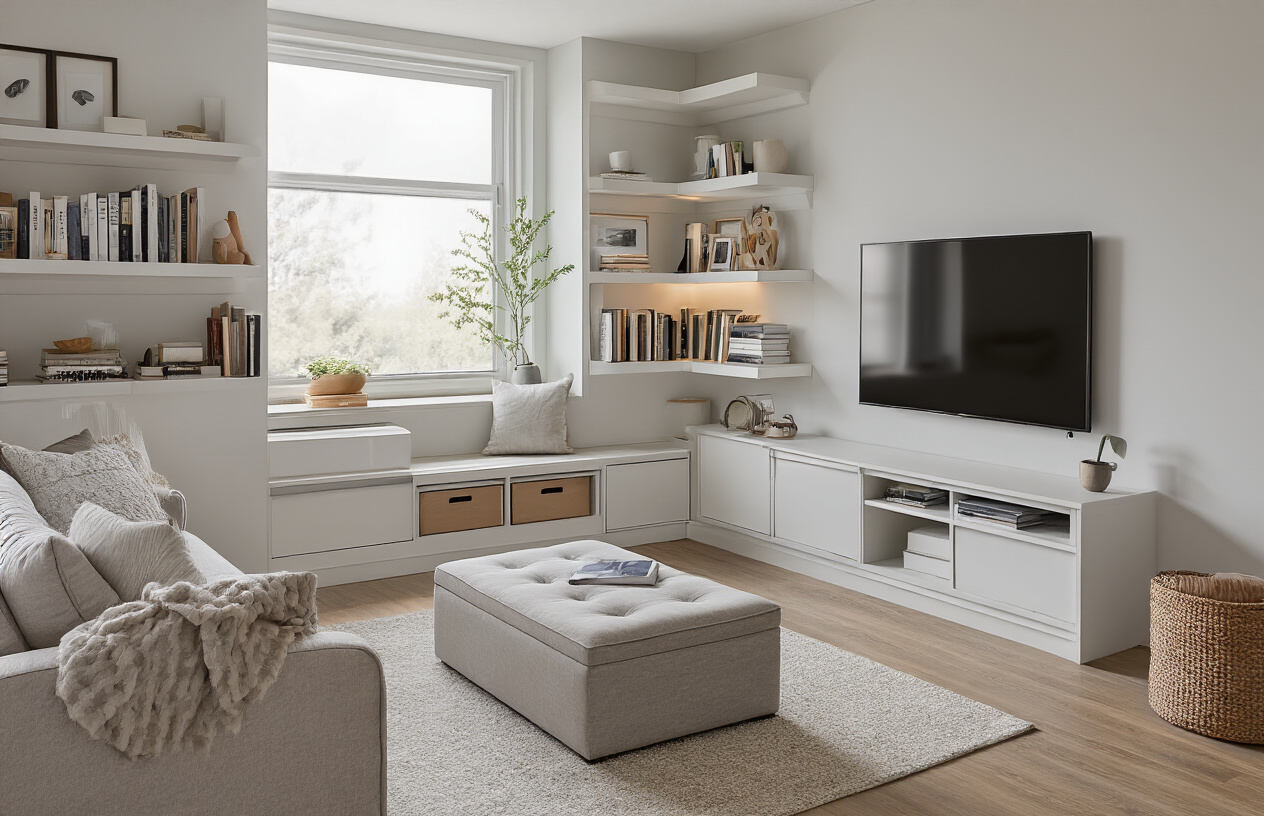
Walls offer incredible potential for small space storage solutions, yet most people only think horizontally. Floor-to-ceiling shelving transforms your walls into powerful storage assets while creating the illusion of height that makes rooms appear larger. The key lies in drawing the eye upward, which tricks the brain into perceiving more spaciousness.
Built-in shelving units work exceptionally well because they seamlessly blend with your room’s architecture. When painted the same color as your walls, these shelves virtually disappear while providing maximum storage capacity. For renters or those on a budget, tall bookshelf units achieve similar results. Look for narrow profiles that won’t overwhelm your space – shelves between 8-12 inches deep work perfectly for most items.
The magic happens when you style these shelves strategically. Place heavier, darker items on lower shelves and lighter, more decorative pieces up high. This weight distribution feels natural while maintaining visual balance. Mix books with decorative objects, plants, and storage boxes to avoid the dreaded “wall of books” look that can feel overwhelming in tight quarters.
Consider installing floating shelves in corners where traditional furniture won’t fit. These awkward spaces often go unused, but corner shelving can house everything from plants to books to decorative storage containers. The continuous line from floor to ceiling creates vertical emphasis that makes your room feel taller than its actual measurements.
Small space decorating requires thinking beyond obvious storage locations. Every surface and cavity in your home holds potential for clever concealment that keeps belongings organized without creating visual chaos.
Ottoman storage serves dual purposes brilliantly – providing seating while hiding blankets, games, or seasonal items inside. Choose ottomans with firm tops that can double as coffee tables when topped with a decorative tray. This multifunctional approach is essential for maximizing small spaces effectively.
Under-stair areas often become dead zones, but these spaces can accommodate custom storage solutions. Install pull-out drawers, coat hooks, or even a small desk area depending on your ceiling height. The space beneath your staircase might become your home’s most valuable storage real estate.
Bed frames with built-in storage revolutionize bedroom organization. Platform beds with drawers underneath eliminate the need for separate dressers, freeing up floor space for better traffic flow. For existing beds, consider storage containers designed to slide underneath – just ensure they’re easily accessible and clearly labeled.
Behind doors offers prime real estate for storage that stays completely hidden when doors are closed. Over-the-door organizers work for more than just shoes – they’re perfect for cleaning supplies, craft materials, or pantry overflow. Install hooks, narrow shelving, or pocket organizers to transform these overlooked spaces into storage goldmines.
Kitchen islands and bathroom vanities can incorporate hidden compartments through clever design. Look for pieces with toe-kick drawers, false fronts that open to reveal storage, or interior organizers that maximize every cubic inch of cabinet space.
Visual clutter makes any space feel smaller and more chaotic, but the right containers create order while adding style to your decor. The secret lies in choosing storage solutions that blend seamlessly with your aesthetic rather than fighting against it.
Woven baskets bring texture and warmth while hiding everything from throw pillows to kids’ toys. Choose baskets in neutral tones that complement your color scheme – natural fibers like rattan, jute, or seagrass work beautifully in most decorating styles. Lidded baskets work especially well for items you access frequently but want to keep dust-free.
Clear acrylic containers excel in spaces where you need to identify contents quickly, like craft rooms, pantries, or offices. Their transparent nature prevents visual weight from accumulating while keeping everything organized and accessible. Stack different sized containers to create efficient storage systems that look intentionally designed.
Uniform containers create visual calm even when storing diverse items. Choose one style of storage box or basket and repeat it throughout your space for cohesive organization. This repetition tricks the eye into seeing order rather than chaos, making rooms feel more spacious and intentional.
| Container Type | Best For | Visual Impact |
|---|---|---|
| Woven Baskets | Soft goods, toys, linens | Warm, textural |
| Acrylic Boxes | Office supplies, craft items | Clean, modern |
| Fabric Bins | Clothing, seasonal items | Soft, customizable |
| Wire Baskets | Produce, bathroom items | Industrial, airy |
Labels transform any container system from functional to professional-looking. Whether you prefer clean typography or handwritten tags, consistent labeling helps everyone in your household maintain organization. This system prevents the dreaded “junk drawer” effect that makes small spaces feel overwhelming.
Group containers by height and size to create pleasing visual arrangements. Three containers of varying heights often look more dynamic than identical pieces, while maintaining the organized appearance that makes small space decorating successful.
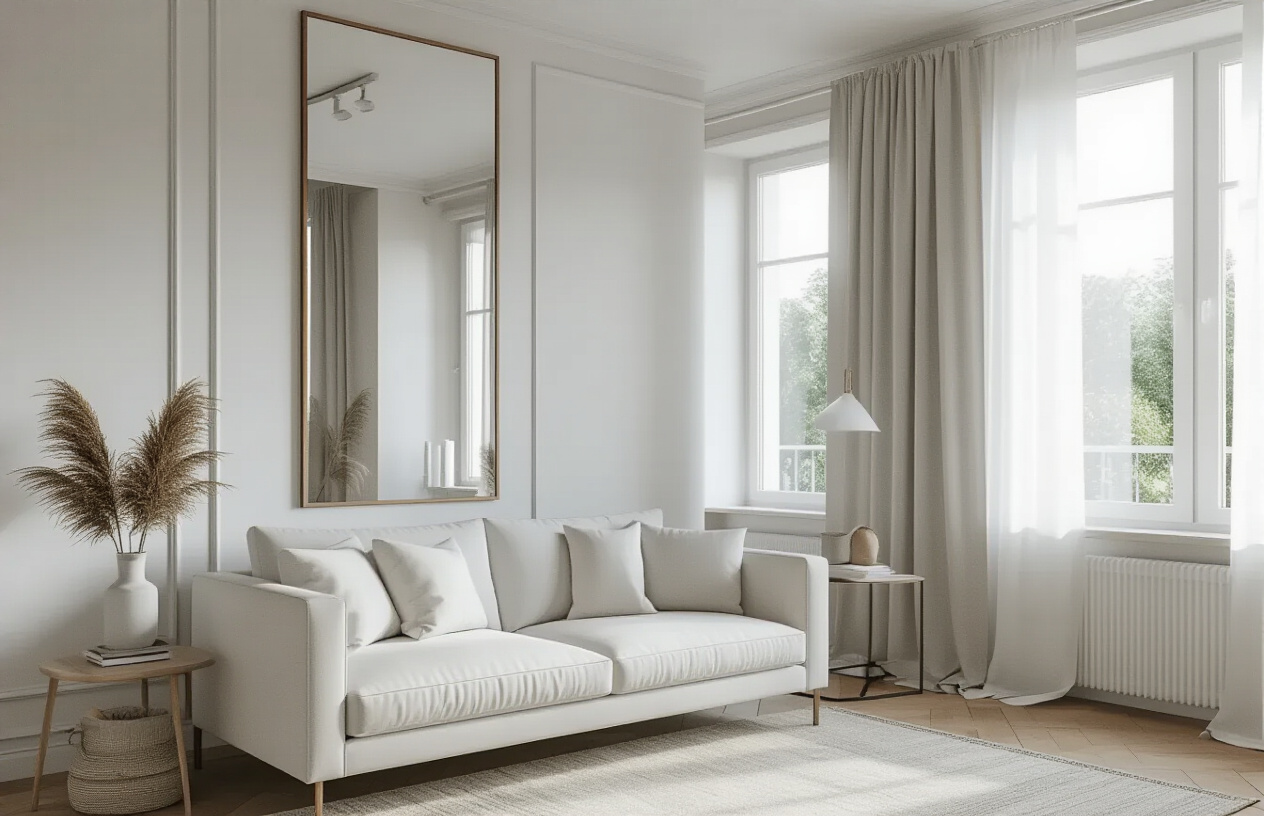
Mounting curtains near the ceiling instead of just above your windows creates an instant illusion of height that dramatically transforms how spacious your room feels. This simple visual trick for small rooms draws the eye upward, making your ceilings appear taller and your entire space more expansive.
When you hang curtains at window height, you’re essentially cutting your wall in half visually. By raising them to ceiling level, you create one continuous vertical line that makes your walls look longer. Choose curtains that extend all the way to the floor for maximum impact – even if they puddle slightly, the unbroken line creates a sense of grandeur.
The key is selecting the right hardware. Wall-mounted brackets work better than ceiling-mounted ones because they allow curtains to hang closer to the wall, creating cleaner lines. Opt for simple, streamlined curtain rods that don’t compete with the vertical emphasis you’re creating.
Striped patterns work like magic in small space decorating because they guide the eye in specific directions. Vertical stripes naturally draw attention upward, creating the perception of height, while horizontal stripes can make narrow rooms appear wider.
Consider incorporating vertical stripes through wallpaper on an accent wall, striped throw pillows, or even a strategically placed area rug with linear patterns. The stripes don’t need to be bold or contrasting – even subtle tonal variations in the same color family can create this elongating effect.
Avoid mixing too many different striped patterns in one room, as this can create visual chaos. Instead, choose one primary striped element and complement it with solid colors or subtle textures. A vertically striped shower curtain in a small bathroom or vertical wood paneling can instantly make the space feel taller.
Small rooms often get cluttered with tiny decorative pieces that make the space feel cramped and busy. Large-scale artwork creates a focal point that actually makes your room appear bigger by providing visual breathing room.
One substantial piece of art commands attention and creates the illusion that your wall – and by extension, your room – is larger than it actually is. Small scattered pieces fragment the visual space, making everything feel chopped up and confined.
When selecting artwork for small spaces, choose pieces that are roughly two-thirds the width of your furniture piece below it. A large canvas above your sofa or a substantial mirror above your dining table creates better proportions than a gallery wall of small frames.
Don’t be afraid to go bold with your art choices. A large abstract painting or an oversized photograph can become a statement piece that distracts from the room’s actual dimensions while adding personality and style.
This might seem counterintuitive when you’re trying to maximize small spaces, but pulling furniture away from walls actually creates the illusion of more room. When every piece of furniture hugs the perimeter, you create a bowling alley effect that emphasizes the room’s limitations.
Floating your sofa a few inches from the wall allows light and air to circulate behind it, creating depth. Position your coffee table at an angle or pull your bed slightly away from the wall to create walkways that suggest the room extends beyond what’s immediately visible.
This technique works particularly well with multifunctional furniture pieces. A console table placed behind your sofa can serve as both storage and a room divider, creating distinct zones within your small space while maintaining an open feeling.
The goal is creating what designers call “negative space” – areas where the eye can rest. These visual breaks between furniture pieces and walls trick the brain into perceiving more square footage than actually exists.
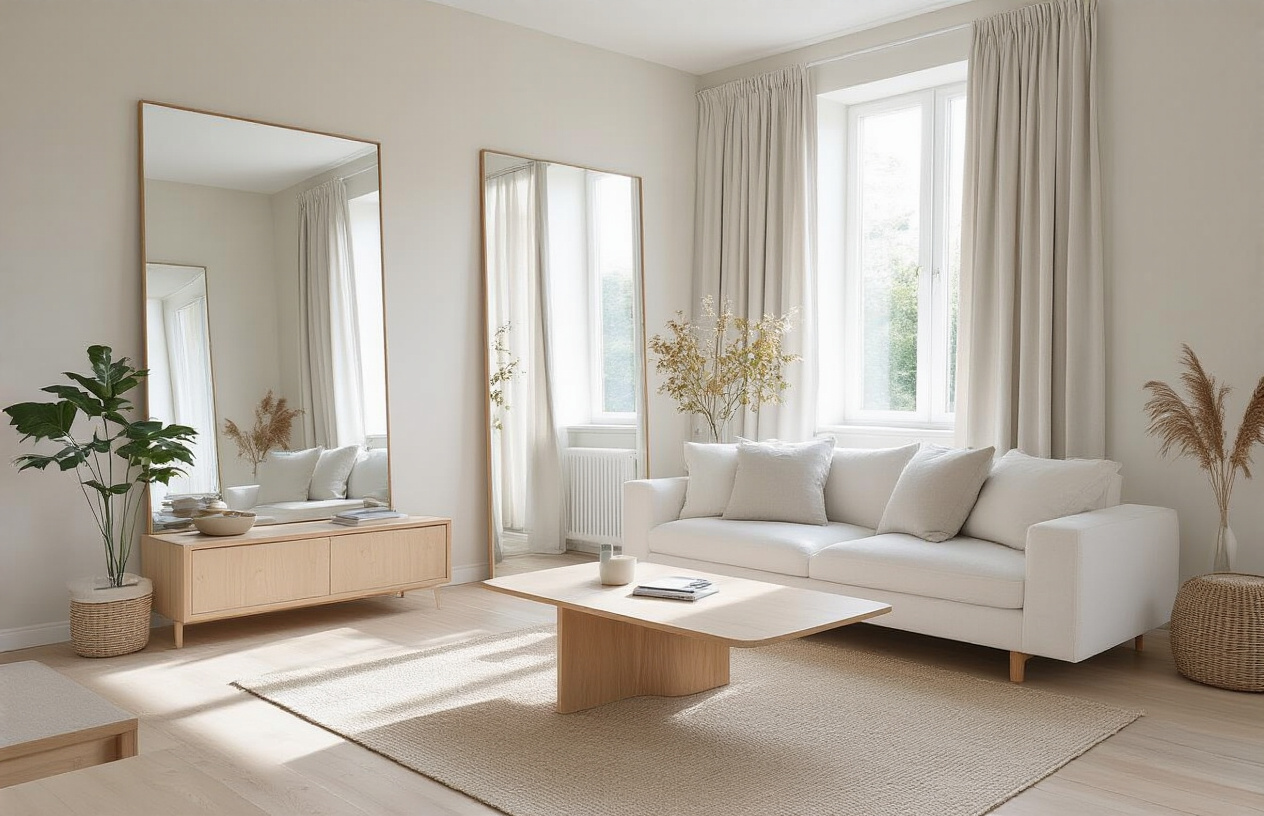
Small spaces don’t have to feel cramped when you know the right tricks. Smart lighting choices, light color schemes, multi-functional furniture, clever storage, and visual illusions can completely transform how your space feels. These strategies work together to create the impression of more room while keeping everything you need within reach.
The best part about making your small space feel bigger is that most of these changes don’t require a major renovation or huge budget. Start with one or two techniques that appeal to you most, then gradually add others as you see what works. Your small space has more potential than you think – it just needs the right approach to unlock it.